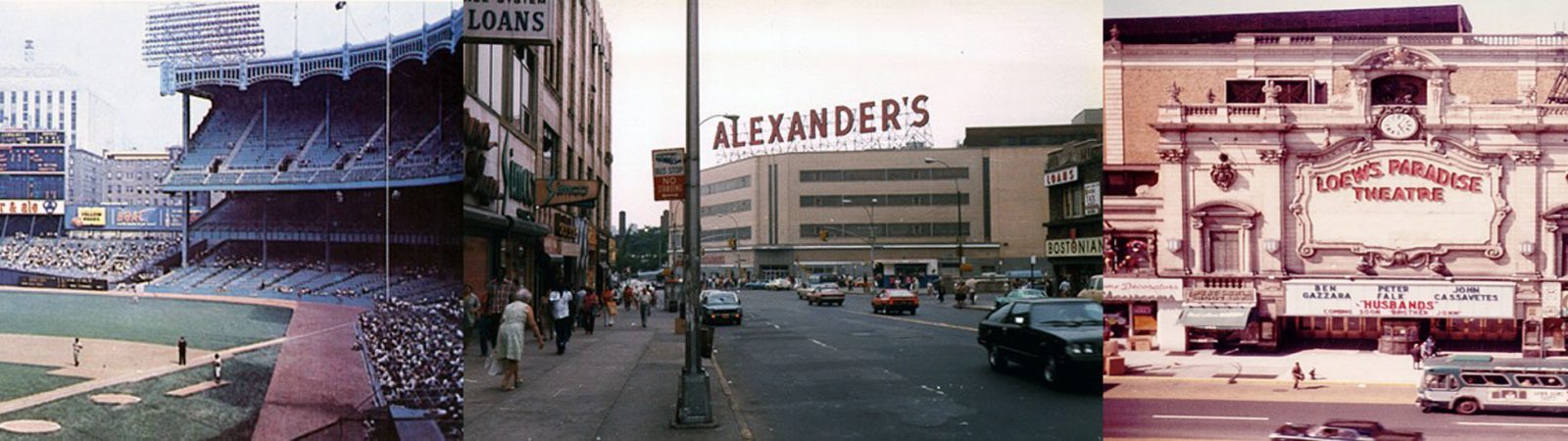
The Paradise Reborn
Loew's Paradise Reopens Oct. 29, 2005


By Martin A. Jackson
(Photos by Martin A. Jackson)

It’s back. Incredibly, wondrously, despite all the grim predictions, the Loew’s Paradise has been reborn and, with some caution, I can report that it is nearly the same magical theatre that you remember from your youth.

That’s the good news. The bad news, or at least the note of regret, is that 1956 is gone forever and you aren’t going to relive those moments except in your memory. Yes, there are the clouds gliding by in the balcony and the intricate carvings on the ceiling, and the sweeping staircase has come back to life, along with the elegant rest rooms on the upper floor.

But don’t look for the goldfish pools in the lobby or the plush carpets that once caressed the feet of ordinary Bronxites unused to such luxury. The little flourishes that once made the Paradise a visit to wonderland are largely gone, banished to that land of memory with the Giants, the trolley cars and Krum’s Ice Cream Parlor.

What we do have, however, isn’t to be sneezed at. A Bronx landmark is alive once more on the Grand Concourse. The rebirth took years to mature and a great deal of faith but it came to fruition on October 29, 2005, when the red carpets and the police barricades heralded the rebuilt Paradise to the world. Other developers had stepped to the plate in the years since the Paradise was shuttered in the 1970s. Some tried to make the old theatre into a duplex, to bring back the movie audiences, and it went so far that the Paradise was for a few brief and sad months a quad cinema, as if it were in a strip mall in New Jersey.

Thankfully, as it turned out, these misguided efforts came to nothing and when movies themselves became VHS tapes and later DVD discs, the idea of filling four thousand seats in the Paradise with movie goers was seen to be dead and finished. The last effort, by Richard DeCesare, a few years ago seemed more realistic: make the Paradise a concert and music venue, and throw in an occasional boxing match and beauty pageant. But that too came to a sad end: after investing a reported million (or more) dollars in renovations, DeCesare stood back and admitted that the job was too big, and far too expensive given the projected income.

So again the Paradise stood empty, waiting for salvation from the wrecker’s ball. The savior turned out to be investor and developer Gerald Lieblich, who somehow found the funding and the energy to breathe life into the nearly comatose Paradise rebuilding project. In 2003, Lieblich assembled the reported four and a half million dollars to finance the massive project, and work was started. A massive cleaning of the paintings and the imposing statuary was undertaken, and the box office was rebuilt in an exact copy of the original one that stood on the Concourse since 1929. Ever since architect John Eberson was given free rein by the Loew’s organization in the late 20s, the Paradise exemplified the grand age of movie-going. Patrons demanded luxury and fantasy in their films in that silent era, and they also responded to bigger and more luxurious theatres. Eberson became famous for his theatre designs, doing work for Loew’s and other Hollywood dream machines who dominated the movie business through World War II. Bigger and better was the selling point to draw movie fans, and in the Paradise they were treated to the apogee of splendor and design. The noted overhead sky show made the Paradise unique ever since its first day; stars that actually twinkled and clouds that drifted majestically past the Moorish/Roman/fairy tale décor of the auditorium. On the opening night in 1929, there were even live canaries singing in the cypress trees. With its four thousand seats and the corps of trained and uniformed ushers, going to the Paradise was a thrill that never disappointed even the poorest of customers.

For those Bronxites who recall the days when the Paradise was the center of Bronx cultural life, the scope of the rebuilding needs no explaining. There were the grand staircases leading up to the balcony, the dazzling brass elevators and grand lobby, the intricate sculptures which seemed to cover every flat surface from the ticket booth to the stage, and even the well-loved goldfish pool that lured every child whose parents were kind enough to treat them to a visit. And of course, the starry skies and moving clouds that somehow floated over the vast auditorium, and which remain unforgettable memories to Bronxites everywhere.

And so it came to pass. Not in every detail and piece of plaster, but enough of the Paradise was recovered and repaired to make the theatre familiar to the legions who cherish the memory. Sorry, but no gold fishpond, nor any uniformed ushers to escort customers to their seats. And while the clouds still float over the audience and the Moorish castles tower over the stage, there are no moving stars…victims of either age or budget realities. Perhaps we should be applauding the long life and inexplicable survival of the remaining statues and gilt ceilings, rather than mourn the loss of some details. After all, the Paradise stood empty and alone for years, a prime target (we would imagine) for the vandalism and fire that leveled so much else in the Bronx in the bad years.

A cool night in the Bronx, and the neighborhood kids were transfixed by the doings at 188th Street: police cars with lights flashing barred the southbound lanes of the Concourse, and a red carpet was laid in front of the redone Paradise, while limousines and taxis arrived in a steady stream to let the invited guests into the opening night reception. Meanwhile, along the Concourse, a steadily growing crowd of paying customers lined the street to await the official opening and see the first Latin music concert. The famous Paradise marquee was glowing red overhead, the ticket booth was polished to a high brass shine, and security guards lined the entrance to keep order. It was a new experience for the neighborhood, nothing like it had been seen in decades and it drew on-lookers like the Academy Awards does in Los Angeles. Press was there too: TV cameras with bright lights and photographers crowding for the best position to record the event. Local TV news crews were out with their cameras and crews, waiting for the sight of reported celebrities on their way. As it turned out, Mayor Bloomberg did not make an appearance, but neither did his political adversary Freddie Ferrar (it was the end of a mayoral election season), the former Bronx Borough President. The current Borough President, Alfonse Carrion, did arrive in a swirl of lights and handshakes, and there was a substantial presence from local politicos and VIPs to satisfy the press. A red carpet was laid at the entrance and got plenty of use from special guests, who held invitations to the pre-show reception held in the balcony. In that closely guarded area, the VIPs enjoyed an open bar and hot snacks passed around by waiters and lovely ladies in daring outfits. There was, too, a cash bar in the lobby for the regular folks but they had no free food. The Paradise lobby was, in fact, radically changed from the old days. Gone was the thick carpet and replaced by a more economical concrete floor, but concrete with bits of sparkle and fresh paint, so the floor bounced back the overhead lights. But the centerpiece was the oval bar, an innovation that would have bewildered the audiences of the 40s and 50s, who had to settle for chocolate bars and Mason mints from the candy counter to accompany their movie experience.

A striking feature of this redone Paradise was the presence of security personnel: very large men in black suits who patrolled with grim expressions and quietly, but quickly, settled any problems with admittance or complaints. For those who might have worried about safety in the Bronx of 2005, it was beyond doubt. Added to the Paradise security corps were a contingent of New York City Police, who stayed outside but whose presence was welcomed. On this opening night, the southbound lane of the Grand Concourse was closed to traffic by NYPD cars with flashing lights, and limousines were allowed to unload but not park outside the theatre. With the grand marquee of the Paradise lit in red, the glitter of the cars and the lights of the TV cameras, it was reminiscent of the Academy Awards show…but with a Bronx flavor.

The opening night bill was Latin music, Puerto Rican star Gilberto Santa Rosa headlined the event and other entertainers included Milly Quezada and a full orchestra who belted out the Latino rhythms with gusto. Tickets for this night weren’t cheap: fifty-eight dollars for rear orchestra seats, for example and ninety-five for the better views up front. The man who leased the property, an energetic promoter named Gabriel Boter, plans concerts , beauty pageants and even ten boxing matches over the next year or so, and to judge from the first night, he will find his audience.

It was a memorable night for the Bronx, which, in the minds of many, had been long ago lost to, fires, crime and poverty. The Paradise was proof of the opposite: the Bronx was struggling back and the glory days of the Paradise might just be starting . . . again.